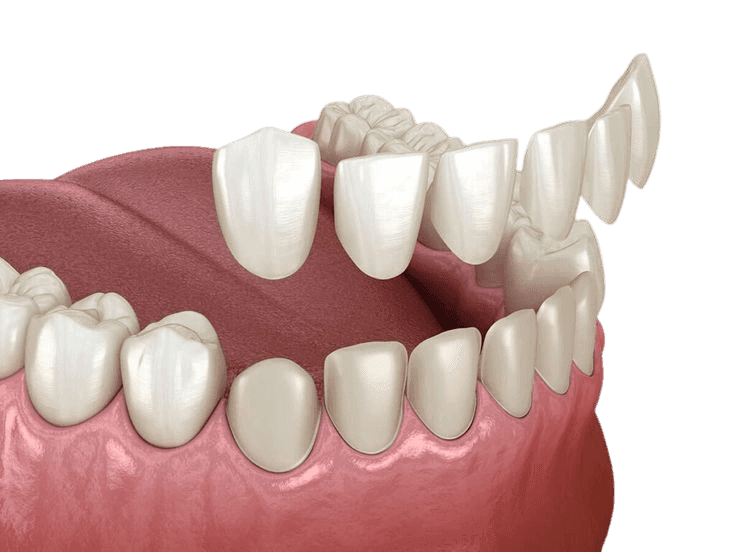
E-Max Veneers
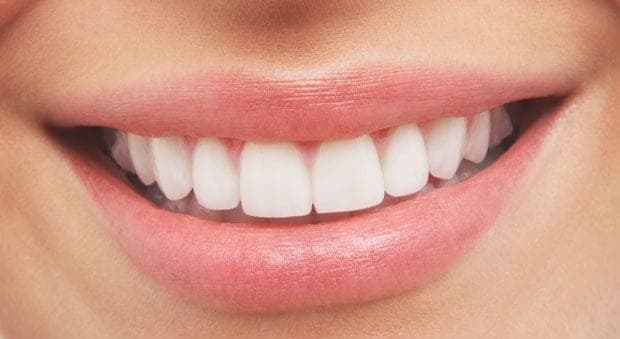
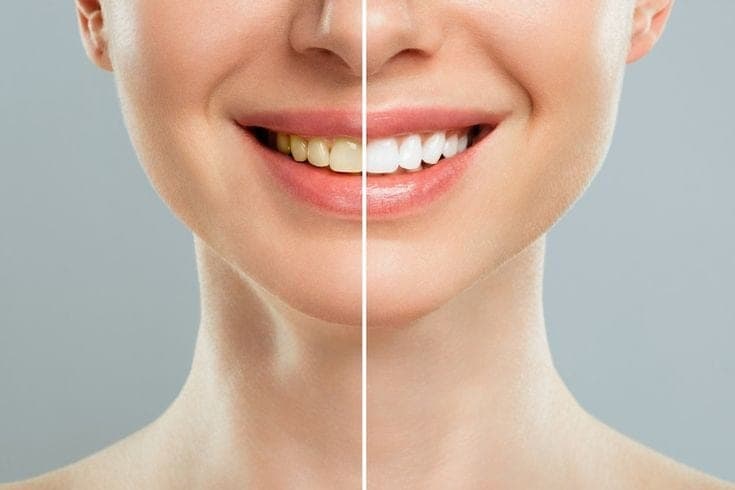
E-Max veneers are very thin shells of lithium disilicate ceramic bonded to the front surface of teeth. They change the color, shape or size of teeth, covering stains, chips, small gaps and minor unevenness. Because the material is both strong and translucent, it can be made thin while still looking like natural enamel.
- Visits
- Usually 2–3
- Treatment time
- A few weeks from start to finish
- Longevity
- Often 10–15 years with care
Who it suits.
- Deep stains that whitening cannot remove
- Chipped, worn or uneven front teeth
- Small gaps or mildly irregular teeth
- Teeth that look too short or oddly shaped
What it brings.
Lifelike appearance
Lithium disilicate lets light through in a way that resembles natural enamel.
Thin but strong
The material stays strong at small thicknesses, which can mean less tooth reduction.
Stain resistant
Glazed ceramic resists staining from coffee, tea and wine better than natural enamel.
Tailored design
Shape, length and shade are planned to suit your face and smile.
Step by step.
- 01
Consultation and design
Your dentist checks that your teeth and gums are healthy, discusses your goals and often uses photos, scans or a trial mock-up to plan the new shape.
- 02
Preparing the teeth
A thin layer of enamel is usually removed from the front of each tooth so the veneer sits flush and looks natural.
- 03
Impressions and temporaries
A scan or impression is sent to the lab, and temporary veneers may be placed while the final ones are made.
- 04
Bonding
Each veneer is checked for fit and shade, then bonded to the tooth and the bite is fine-tuned.
Looking after it.
- Brush twice daily with a soft brush and non-abrasive toothpaste, and floss daily
- Avoid biting directly into very hard foods or objects; use your back teeth instead
- Wear a night guard if you grind or clench
- Keep up regular check-ups to monitor the veneer edges and gums
Good to know.
Are veneers reversible?
In most cases no. Because some enamel is usually removed, the teeth will always need a covering afterwards, so it is worth taking time over the decision.
Does the procedure hurt?
The teeth are usually numbed before any enamel is removed, so it should not be painful. Some mild sensitivity for a short time afterwards is possible, and there is generally no downtime.
How long do veneers last?
Porcelain veneers often last around ten to fifteen years with good care, and sometimes longer. Grinding, biting hard objects and gum health all affect how long they last.
Explore more.
Discover the
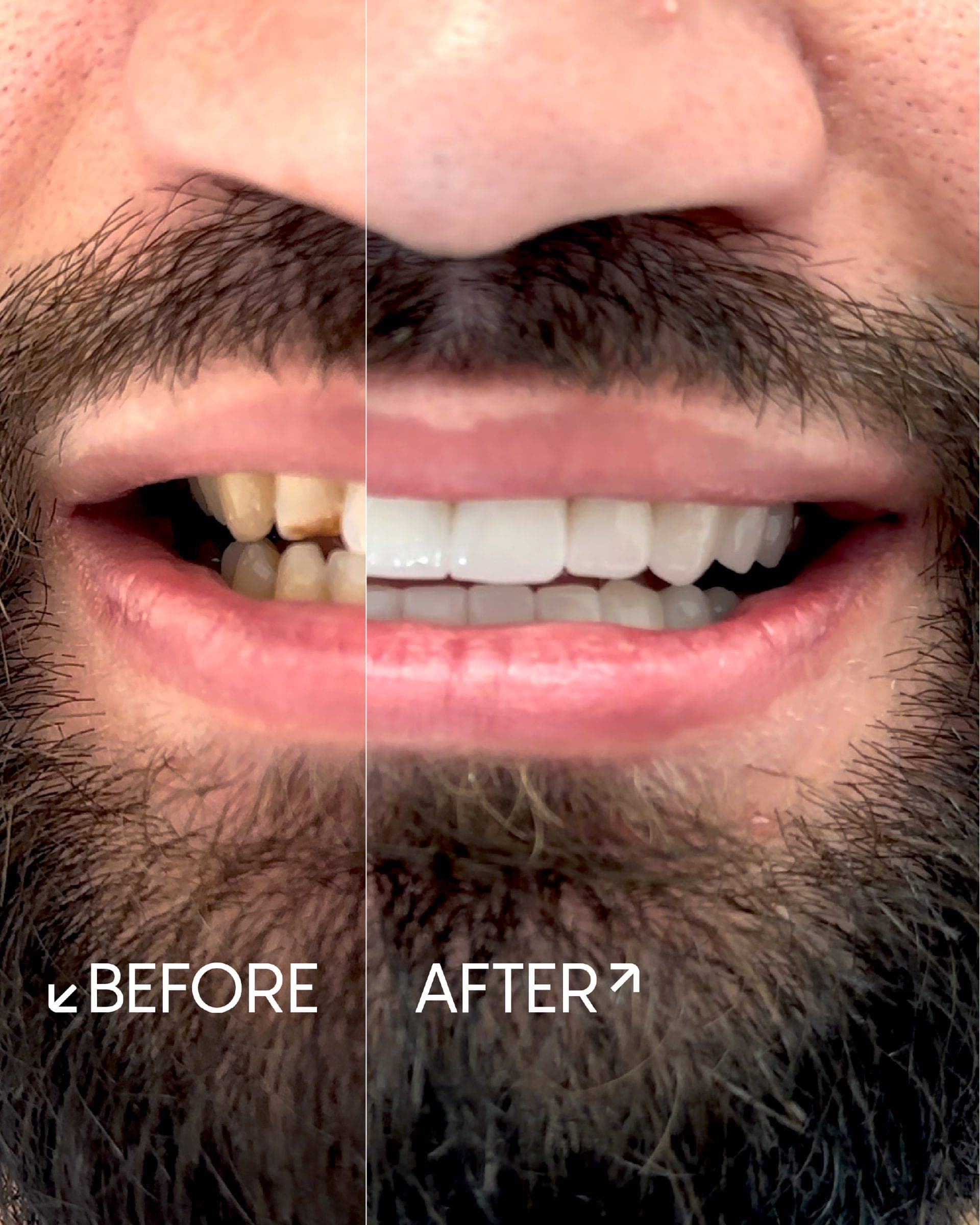
Power of change.

In their own words.

“I'm very happy with my experience! The team was professional, and the treatment was top-quality. I saved a lot on my dental work without compromising on care. Highly recommend!”

“The clinic exceeded my expectations! The staff was friendly, and the care was excellent. I got a full smile makeover at an unbeatable price. Very satisfied!”

“I was nervous at first, but the team made me feel comfortable and the treatment was painless. I'm thrilled with the results and the savings. I highly recommend it!”

“Great dental care at an affordable price. The team was friendly and professional, and I'm really happy with the results. Highly recommend the clinic!”