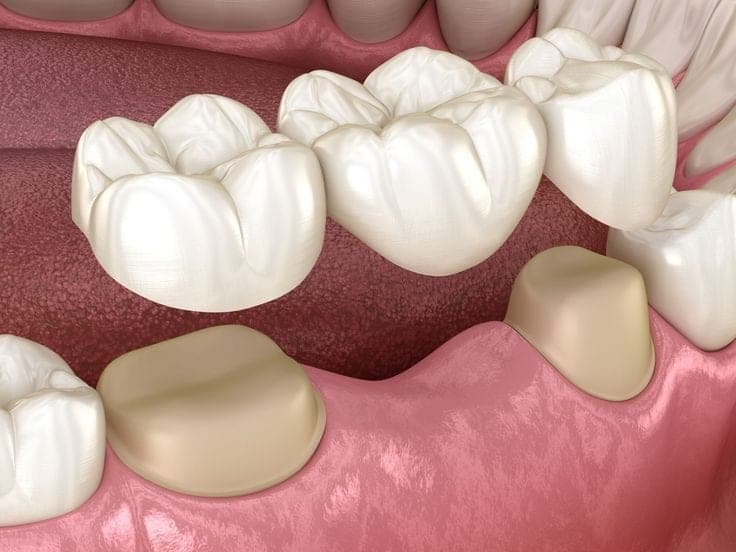
Dental Bridges
A dental bridge replaces one or more missing teeth by filling the gap with artificial teeth held in place by the teeth or implants on either side. It is fixed in the mouth rather than removable. Bridges restore your smile and bite, and stop neighboring teeth from drifting into the space.
- Visits
- Usually 2
- Treatment time
- Around 2–3 weeks overall
- Longevity
- Often 5–15 years
Who it suits.
- One to a few missing teeth in a row
- Healthy, strong teeth next to the gap that can support the bridge
- People who prefer a fixed option over a removable denture
- Neighboring teeth that already need crowns
What it brings.
Fills the gap
Replacement teeth close the space and restore a complete-looking smile.
Easier chewing and speech
Replacing missing teeth helps you bite, chew and speak more comfortably.
Keeps teeth in place
The bridge helps prevent nearby teeth from tilting or shifting into the gap.
Fixed, not removable
It stays in your mouth and is cared for much like natural teeth.
Step by step.
- 01
Consultation and X-rays
Your dentist checks the gap and the supporting teeth, and explains which type of bridge suits your situation.
- 02
Preparing support teeth
The teeth on each side of the gap are numbed and reshaped so they can hold crowns that anchor the bridge.
- 03
Impressions and temporary
Impressions or a digital scan are sent to the lab, and a temporary bridge protects the prepared teeth in the meantime.
- 04
Fitting the bridge
The final bridge is checked for fit, bite and color, then cemented in place, with a follow-up to confirm it feels right.
Looking after it.
- Clean under the false tooth every day using floss threaders, interdental brushes or a water flosser
- Brush twice daily with fluoride toothpaste
- Cut hard or chewy foods into smaller pieces
- Keep up regular check-ups so the supporting teeth stay healthy
Good to know.
How many visits does a bridge take?
A traditional bridge usually needs two appointments, with a gap of a couple of weeks while the lab makes it. Implant-supported bridges take longer because the implants must heal first.
How long does a bridge last?
Bridges commonly last between five and fifteen years, and sometimes longer. The health of the supporting teeth and how well you clean under the bridge make the biggest difference.
Are there different types of bridge?
Yes. A traditional bridge is anchored by crowns on both sides, a cantilever bridge is supported on one side only, a Maryland bridge is bonded to the back of neighboring teeth, and an implant bridge sits on implants. Your dentist will recommend one based on where the gap is and the condition of nearby teeth.
Explore more.



Discover the
Power of change.

In their own words.

“I'm very happy with my experience! The team was professional, and the treatment was top-quality. I saved a lot on my dental work without compromising on care. Highly recommend!”

“The clinic exceeded my expectations! The staff was friendly, and the care was excellent. I got a full smile makeover at an unbeatable price. Very satisfied!”

“I was nervous at first, but the team made me feel comfortable and the treatment was painless. I'm thrilled with the results and the savings. I highly recommend it!”

“Great dental care at an affordable price. The team was friendly and professional, and I'm really happy with the results. Highly recommend the clinic!”