What Whitening Toothpaste Actually Does
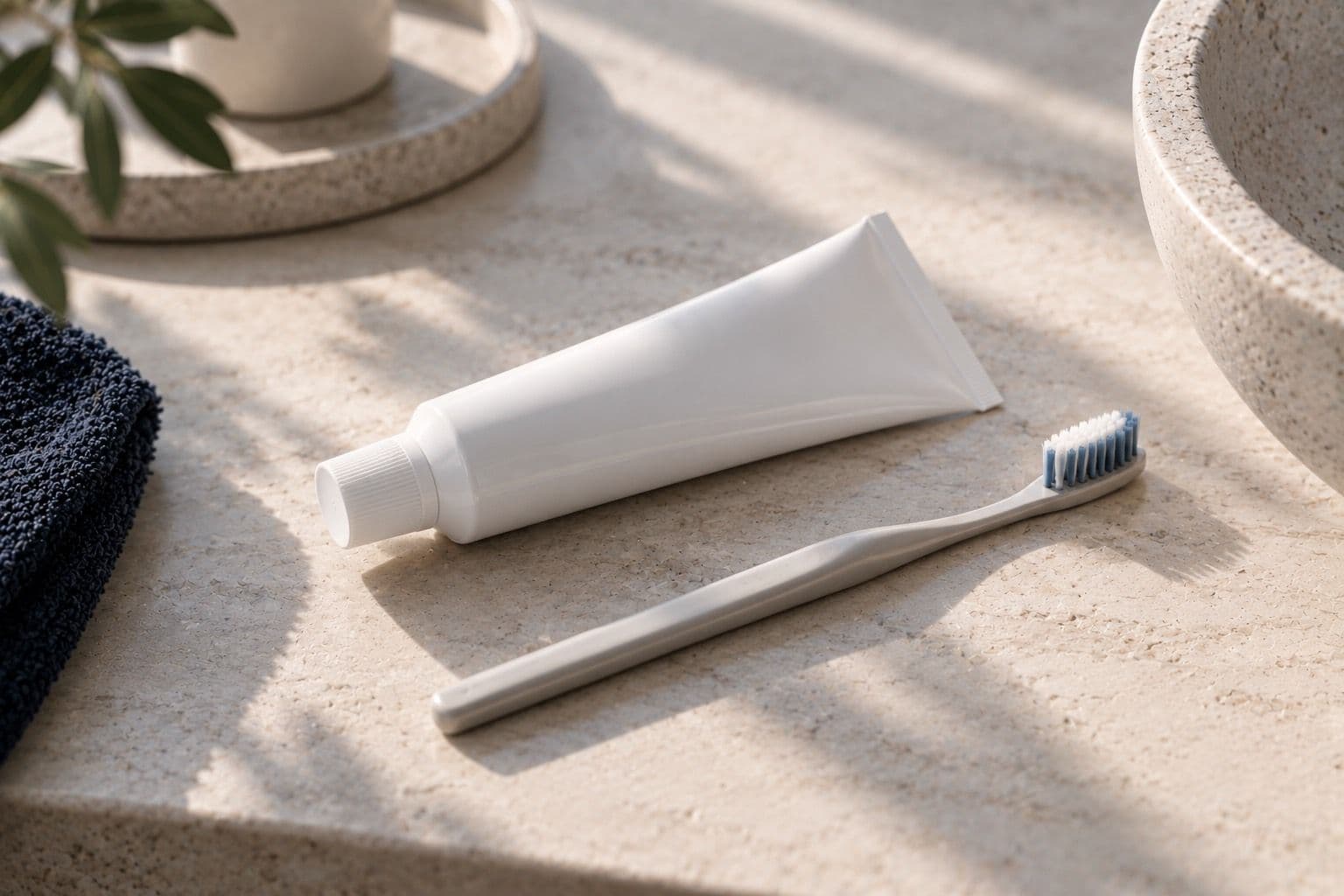
Whitening toothpaste mainly targets surface staining rather than significantly changing the natural color of your teeth. Most products work by removing surface stains from things like coffee, tea, wine and smoking.
They usually contain mild abrasives, and sometimes low levels of peroxide, in much lower concentrations than professional treatments use.
Abrasive Isn't Always Better
Some whitening toothpastes are more abrasive than regular ones. That gritty texture scrubs away stains, but over time it can also wear down enamel, and enamel doesn't grow back.
Thinner enamel can make teeth more sensitive. It can even make them look more yellow, because the layer beneath it, dentin, is naturally darker.
Sensitivity Is Real
Many people notice more sensitivity when they use whitening toothpaste, often because of the abrasives or the peroxide. If your teeth are already sensitive, it may make things worse.
If you still want a whitening boost, look for a gentle formula made for sensitive teeth.
It's Not a Magic Fix
No toothpaste can whiten your teeth overnight, or dramatically. Think of it as a maintenance product that helps keep your teeth looking fresh after a professional whitening.
What to Look For
- A seal of acceptance from a recognized dental association, which shows the product has been tested for safety and effectiveness.
- A gentle formula if you have sensitive teeth.
- Realistic expectations: a subtle lift, not a new shade.
The Bottom Line
Whitening toothpaste can help with surface stains and keep your teeth looking polished, but it isn't a miracle product. For a more noticeable change in shade, ask your dentist about professional whitening. At JokaDent, in-office light-activated whitening is available for suitable patients.
In the meantime, brush twice a day, clean between your teeth, and go easy on the foods that stain.