Twice a Day, Two Minutes
Brush in the morning and last thing at night. Brushing before bed is especially important because saliva flow decreases while you sleep, reducing some of the mouth's natural protection.
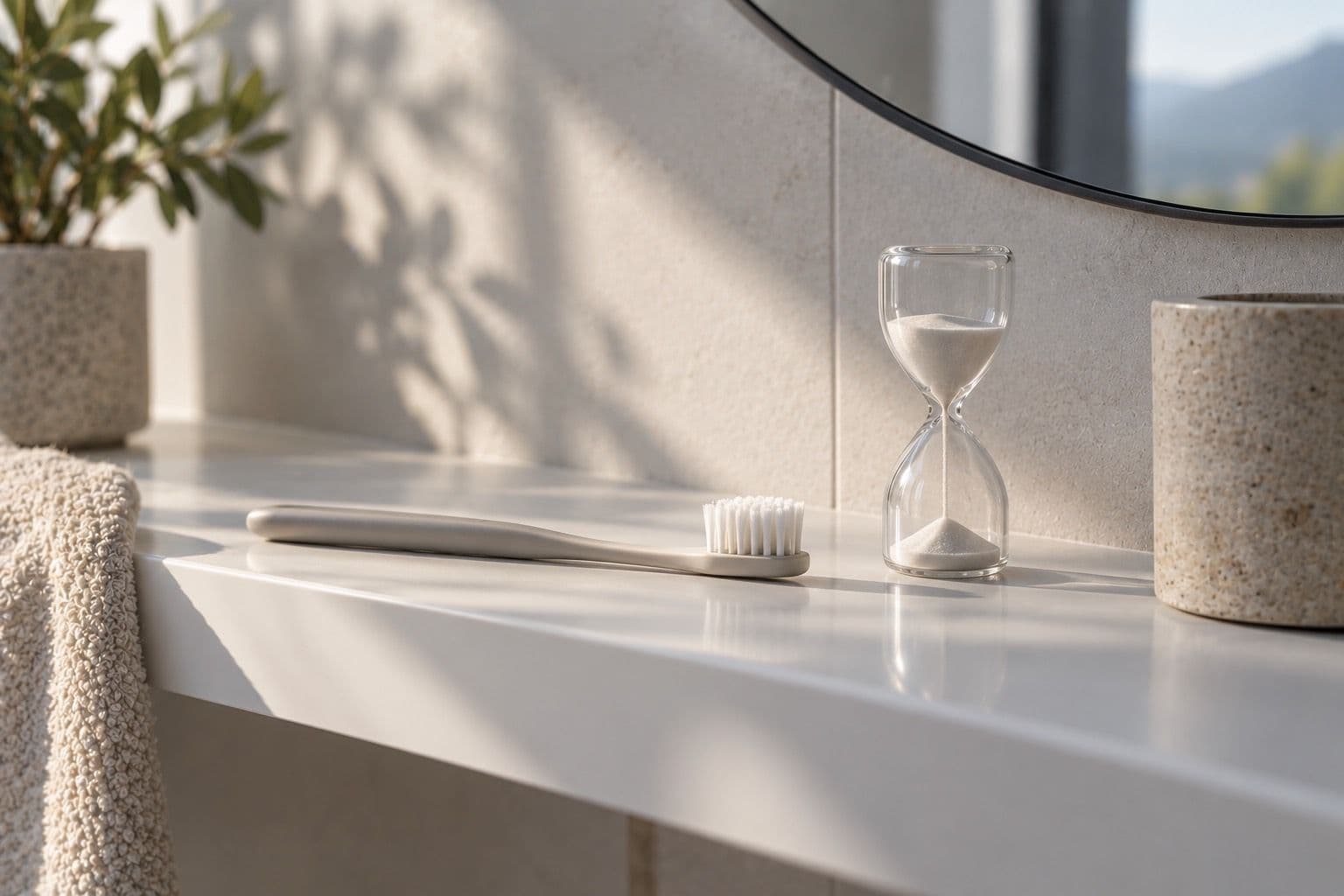
Two minutes feels longer than you think. A timer, or an electric brush with a built-in one, keeps you honest.
Choose the Right Tools
Use a soft-bristled brush and a fluoride toothpaste. Hard bristles are not necessary for effective cleaning and, especially with too much pressure, can irritate the gums and contribute to tooth wear.
Manual and electric brushes both work well when used properly. Replace your brush, or its head, every three months, or sooner if the bristles splay.
The Technique
- Angle the bristles about 45 degrees towards the gum line, where plaque collects.
- Use small, gentle circles rather than hard scrubbing back and forth.
- Work systematically so no area gets missed: outer surfaces, inner surfaces, then the chewing surfaces.
- Don't forget the backs of your last molars.
- Finish by brushing your tongue gently, or use a tongue scraper.
Spit, Don't Rinse
After brushing, spit out the excess toothpaste but don't rinse with water. The fluoride left behind keeps working to strengthen your enamel.
Brushing Is Only Half the Job
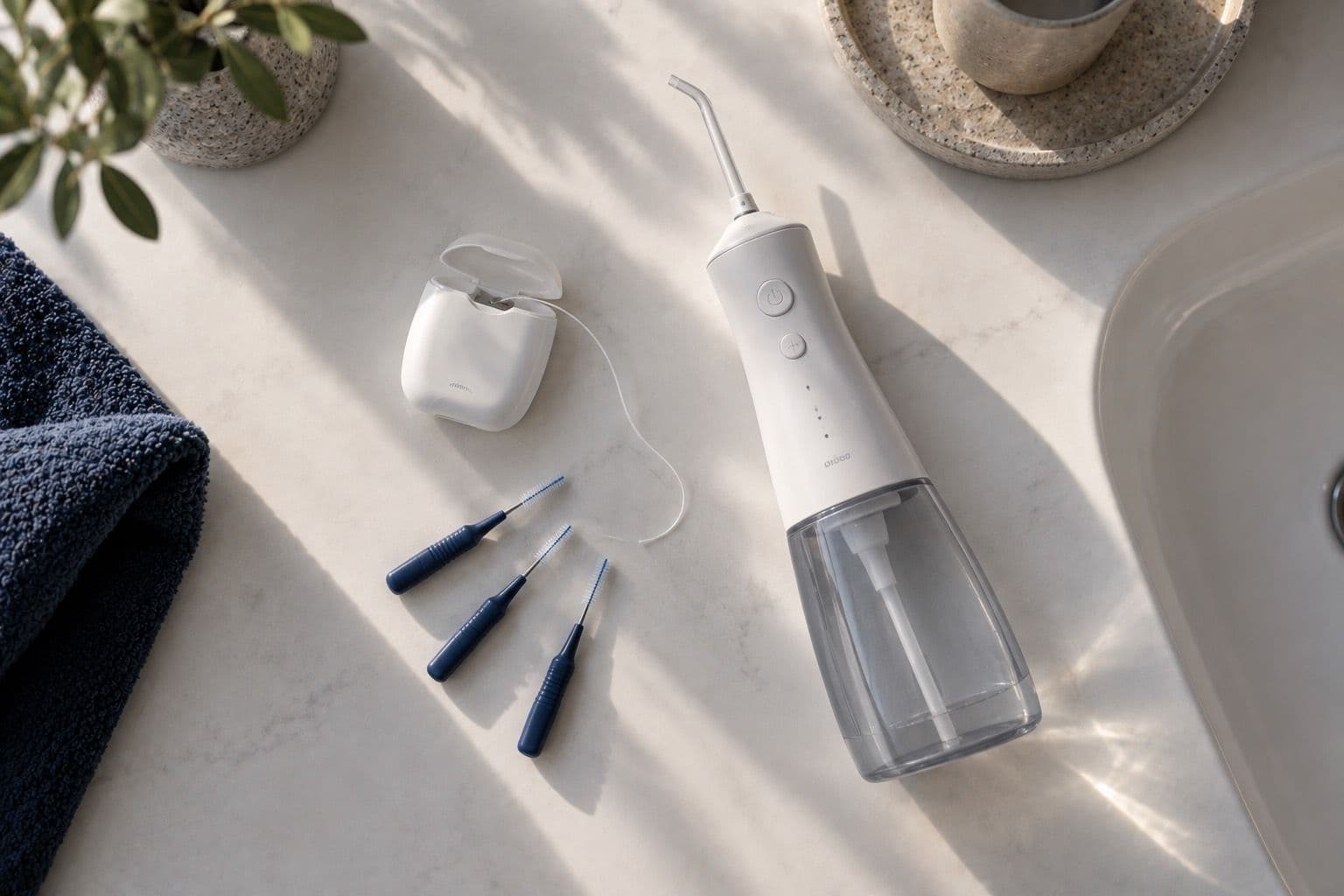
A toothbrush cannot clean every surface between your teeth, where plaque can accumulate and decay may develop. Clean between your teeth once a day, and your brushing will finally have a partner.