Why Cleaning Between Teeth Matters
Brushing reaches the front, back and top of your teeth, but not the surfaces that touch. Plaque left between the teeth can contribute to gum inflammation and decay, and some plaque can eventually harden into tartar.
A few minutes once a day makes a real difference.
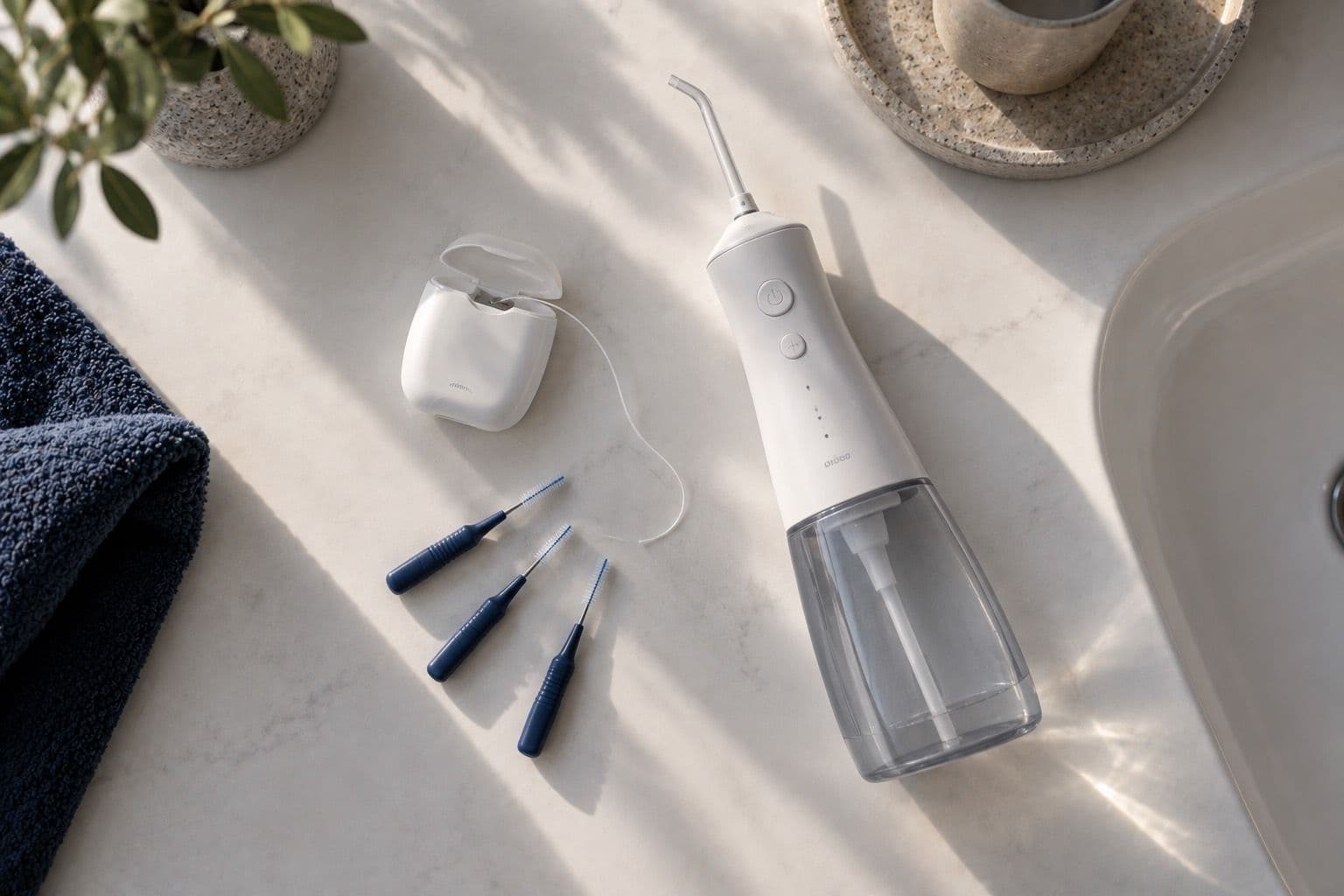
Dental Floss
Floss works best where teeth sit tightly together. Curve it into a C shape around each tooth and slide it gently beneath the gum line.
Never snap it down onto the gum.
Interdental Brushes
These tiny brushes come in several sizes and are excellent for larger spaces, around bridges and around implants. Many people find them easier to handle than floss.
Choose a size that fits snugly without forcing it. Your dentist or hygienist can help you find yours.
Water Flossers
A water flosser uses a thin jet of water to rinse away plaque and food between teeth. It is a good option if you wear aligner attachments, have implants or bridges, or find floss difficult to use.
Its limitation is that it doesn't scrape plaque the way floss or a brush does, so some people use it alongside them.
Bleeding at First Is Common
If your gums bleed when you start, keep going gently. If the bleeding is related to plaque-induced gum inflammation, it may improve as your cleaning becomes more effective.
If bleeding continues, mention it at your next checkup.
The Best Choice
The best method is the one you will use every day. Many people combine two: interdental brushes for the wider gaps and floss for the tight ones.